2015年10月5日星期一
2015年10月1日星期四
2015年8月23日星期日
2015年7月27日星期一
Research about Assignment 2
Principles of Design
The Principles are concepts used to organize or arrange the structural elements of design. Again, the way in which these principles are applied affects the expressive content, or the message of the work.
The principles can be balance, emphasis, movement, pattern, repetition, proportion, rhythm, variety and so on.
Semantic
Semantics is the study of meaning. It focuses on the relation between signifiers, like words, phrases, signs, and symbols, and what they stand for; their denotation. Linguistic semantics is the study of meaning that is used for understanding human expression through language. Other forms of semantics include the semantics of programming languages, formal logics, and semiotics. In international scientific vocabulary semantics is also called semasiology.
Semiotics
The study of signs and symbols as elements of communicative behavior; the analysis of systems of communication, as language, gestures, or clothing.
Semiotics, or semiology, is the study of signs, symbols, and signification. It is the study of how meaning is created, not what it is. Below are some brief definitions of semiotic terms, beginning with the smallest unit of meaning and proceeding towards the larger and more complex.
Metaphor
A figure of speech in which a term or phrase is applied to something to which it is not literally applicable in order to suggest a resemblance, as in “A mighty fortress is our God.” Something used, or regarded as being used, to represent something else; emblem; symbol.
Metaphor Definition
Metaphor is a figure of speech which makes an implicit, implied or hidden comparison between two things or objects that are poles apart from each other but have some characteristics common between them. In other words, a resemblance of two contradictory or different objects is made based on a single or some common characteristics.
In simple English, when you portray a person, place, thing, or an action as being something else, even though it is not actually that “something else,” you are speaking metaphorically. “He is the black sheep of the family” is a metaphor because he is not a sheep and is not even black. However, we can use this comparison to describe an association of a black sheep with that person. A black sheep is an unusual animal and typically stays away from the herd, and the person you are describing shares similar characteristics.
Furthermore, a metaphor develops a comparison which is different from a simile i.e. we do not use “like” or “as” to develop a comparison in a metaphor. It actually makes an implicit or hidden comparison and not an explicit one.
In my opinion, Principles of Design fir me is a guild about how to designing something but the rule it can be break. Semantic is about relating to meaning, especially meaning in language, and also can be about something according to the science of semantics.Semiotics is the study of meaning-making, the study of sign processes and meaningful communication. And semiotics for me is about symbol and how it is the represent thing, matter and so on. Metaphor can use something or have a similarly to indirectly to represent something.
2015年7月19日星期日
Translate Information
The difference between Generation
My Opinion
The Difference of Korean Film Between Generation Z and X...
Information For:
Dracula in a Coffin (1982)
Sopyonje (1993)
Death Bell (2008)
War of the Arrows (2011)
Video Reference:
2015年7月15日星期三
READ, GATHER INFORMATION, AND ANALYSE - History of Film ( The Years Between of Generation)
A Short History of Korean Film
1903-1945: Korea Under Japanese Rule
Only fragments remain of Korea's early
film history. The vast majority of Korea's early film footage was lost due to
neglect or the destruction brought about by the Korean War, and not a single
feature produced before 1934 survives in complete form today. Nonetheless,
historical records paint a picture of a lively and creative industry that
produced over 160 features from the early twenties until Japan's surrender to
Allied forces in 1945.
From 1909 to 1920, a series of theaters
were built in Seoul and in regional cities such as Pusan and Pyongyang. Most of
these theaters were owned by Japanese businessmen, but a few Korean theater
owners built up a significant amount of capital screening European and American
imports. This capital would eventually be used to help finance the first domestic
productions. Korea's first "film" (The Righteous Revenge), a
kinodrama in which actors performed against the backdrop of a projected
feature, debuted at Seoul's Danseongsa Theater in 1919. The public reportedly
loved the show, but the long-term prospects of this and other kinodramas were
hampered by intellectuals who criticized the mixed-media format as an insult to
both theatre and film.
Korea's first silent feature was produced in 1923, and over the
next few years, seven Korean film companies would appear. The masterpiece of
this era is considered to be Na Un-kyu's Arirang(1926, pictured left). Na, only
25 years old at the time, produced, directed and starred in this film about a
mentally unstable man who kills a wealthy landowner's son who is linked to the
Japanese police. The title is taken from a popular folk song, which in its
newly re-arranged form would become an anthem of sorts for the Korean
independence movement. The film, admired for its aesthetic qualities as well as
for its hidden political messages, became an inspiration for a wave of young
filmmakers who hoped to make films based on principles of realism and
resistance to Japanese power.
Despite the increasing popularity of local cinema, however,
Japanese censorship played a large role in limiting its growth. The colonial
government required all foreign and domestic features to be submitted to a
government censorship board for approval before being screened, and police were
present at theaters for screenings. Although a few works extolling Korean
nationalism reached audiences in the late 1920s, from 1930 censorship became
much more strict, such that melodramas, costume dramas, and pro-Japanese films
became more prominent. Several features were banned outright and subsequently
destroyed.
By 1935 the first sound feature Chunhyang-jeon (based on Korea's
most famous folk tale, which has been filmed over a dozen times) was directed
by Lee Myung-woo, with the assistance of pioneering sound technician Lee
Pil-woo. Nonetheless, local filmmakers found it difficult to raise enough money
to produce sound features, and Korean talkies faced much harsher criticism than
the silent films which preceded them. It was only two years later, with the
runaway commercial success of Lee Gyu-hwan's Drifter (1937) that sound films
were established as the norm. In the same year, however, Japan invaded China,
and the Korean filmmakers would come under increasing pressure to shoot films
that supported the Japanese military and the war effort. By 1942,
Korean-language films were banned outright by the government.
1945-1955
Only five films have survived from the period between the U.S.
occupation of Korea and the end of the Korean War. Of them, the most famous is
Choi Un-gyu's Chayu Manse! ("Hoorah! Freedom"), released in 1946. An
ode to patriotism with strong anti-Japanese sentiments, the film proved to be a
hit with audiences.
During the Korean War, much of the country's film reinfrastructure
was destroyed and the center of the industry temporalily moved to Busan. Many
filmmakers became involved in shooting newsreels and war documentaries.
Following the armistice agreement in 1953, President Rhee Syngman declared
cinema to be exempt from all tax, in hopes of reviving the industry. Foreign
aid programs provided South Korea with film technology and equipment, setting
the stage for the rebirth of Korean cinema in the late-fifties and sixties.
1955-1969: A Golden Age for Korean Cinema
The latter half of the 1950s can be considered a period of revival
for the Korean film industry, as the number of domestic productions increased
from 8 in 1954 to 108 in 1959. The public also returned to the theaters,
embracing such features as the now-lost 1955 version ofChunhyang-jeon, which
drew 200,000 viewers in Seoul (over a tenth of the city's population), and
Madame Freedom (1956), based on a scandalous novel that had been published the
year before in a local newspaper.
The late 1950s and early 1960s saw the emergence of some of
Korea's most talented directors. These filmmakers worked during a time when the
domestic film industry enjoyed an unprecedented surge in box office receipts.
However in 1962, military dictator Park Chung Hee instituted a highly
constrictive Motion Picture Law which caused a severe consolidation in the
number of film companies, and which strengthened government control over all
aspects of the industry. Although accomplished films continued to be made up
until the end of the decade, such restrictive policies would ultimately have a
severe effect on the industry's creativity.
Without question, Korea's most shockingly original director is the
late Kim Ki-young. Kim, renowned for his gritty domestic dramas, released his
most famous feature, The Housemaid (pictured right), in 1960. This film -- the
tale of a manipulative housemaid who seduces her master -- transgresses the
laws of contemporary cinema to the same extent that its heroine tears apart the
Confucian order of her household. As in many of Kim's features, the women in
this film possess a great deal of power and become a direct, menacing threat to
their male counterparts. Although Kim's work remained largely forgotten for
many years, he was "re-discovered" in the 1990s and afforded his
rightful place in Korean film history.
Another significant talent to emerge from this era is Yu Hyun-mok,
who captured widespread attention with his 1961 feature Obaltan (translated as
"Aimless Bullet"). This film, which combines the social concerns and
themes of Italian Neorealism with more expressionist sound design and visuals,
expresses the pain and despair brought on by the destruction of the war and Korea's
industrial development. Yu's work, which focuses on marginalized members of
society, is highly stylized and the most obviously intellectual of the period.
Lastly, Shin Sang-ok established himself as a major figure with
early works such as A Flower in Hell (1958) and his best-known film The
Houseguest and My Mother (1961). The latter work, told through the perspective
of a young girl, portrays the struggles of a young widow who falls in love with
her tenant, but cannot express her feelings due to a restrictive social code.
Later in the decade, Shin would turn to color and a more sensual tone in works
such as The Dream (1967), based on an ancient tale about a libidinous Buddhist
monk, and a masterful work set in the medieval Chosun Dynasty: Eunuch (1968).
In 1978, after having made some 80 films in his home country, he and his wife
were mysteriously "kidnapped" and taken to North Korea. After working
in the film industry there for eight years he moved to Hollywood, where he
would produce The Three Ninjas and its sequels under the name Simon Sheen.
The 1970s
In the seventies, the film industry entered a long period of
declining admissions and increased levels of government censorship. In 1973 the
Korean Motion Picture Promotion Corporation (the precursor to the Korean Film
Council) was formed in an effort to revive the industry, and in the following
year the Korean Film Archive was founded, but as an industry Korean cinema
would not reverse its commercial slide until the mid-1990s.
Nonetheless a number of interesting works from this period display
a high degree of originality in their exploration of personal (and, often on a
symbolic level, political) themes. Highlights include some of the most
distinctive works by Kim Ki-young (Insect Woman, Iodo, Woman Chasing Killer Butterfly,
and more); the debut work by gifted director Lee Jang-ho, The Hometown of
Stars; and Road to Sampo, the last film by celebrated filmmaker Lee Man-hee,
who died in 1975 in his mid-forties. The seventies also saw witness to the
short but dazzling career of Ha Kil-jong, described by many as one of the most
talented directors ever to work in Korea. Ha directed seven features including
his best-known work March of Fools (1975) before his early death in 1979 at the
age of 38.
1980-1996
An infusion of new directorial talent in the early eighties would
bring about a modest revival in the film industry. Although attendance remained
at low levels, the eighties witnessed a slight relaxation in censorship and an
increasing recognition from the international film community, culminating
perhaps in Kang Su-yeon's Best Actress award at the 1987 Venice Film Festival
for her role in Surrogate Mother.
Many critics would argue that the
most significant name of the decade is Im Kwon-taek. Although Im had already
directed over 70 features by 1980, it was with Mandala (1981) that he emerged
as Korea's best-known filmmaker. Moving away from his earlier,
commercially-oriented style, Mandala focuses on two monks in order to explore
the meaning and place of Buddhism in Korean society. Im has become known for
his efforts to capture and enshrine the older, forgotten elements of Korean
traditional culture. His most popular and acclaimed feature,Sopyonje (1993,
pictured left), brought about a revival in the Korean vocal art known
aspansori. To date, Im has directed 100 features and he remains a central
figure in Korean film.
In the 1980s, the Korean film industry undertook the first steps
of a major transformation with several important developments. Firstly,
military leader Roh Tae-woo enacted a new constitution in 1988 which led to the
gradual easing of political censorship. One early film to take advantage of
this was Park Kwang-soo's Chilsu and Mansu (1988), which cleverly invokes
images of a street demonstration in its memorable final scene. Park would go on
to direct more acclaimed films, such as Black Republic (1990), To the Starry
Island (1993) and A Single Spark (1995).
Meanwhile back in 1984, a revision to the Motion Picture Law
loosened some of the regulatory restrictions on Korean filmmakers. Independent
production, which had formerly been illegal, was permitted under certain
circumstances, and the government also repealed laws which had kept the film
industry consolidated under a few large companies. The end result of this is
that by the late 1980s a new generation of young producers had entered the film
industry, and their new approaches to filmmaking would eventually have a major
effect on Korean cinema.
However the news was not all positive for local filmmakers. In
1988, a change in policy lifted import restrictions on foreign films, and
allowed Hollywood companies to set up branch offices on Korean soil. Up until
this time, the screening of movies from Hollywood or Hong Kong had always been
strictly controlled and limited by the government in various ways. These new
laws would mean that for the first time, Korean films would have to compete
directly with Hollywood product. Over the next few years, domestic films would
gradually lose their market share, reaching a low point in 1993 when Korean
cinema made up only 16% of overall attendance figures. The Screen Quota System,
whereby theaters were obliged to screen Korean features for 106-146 days out of
the year, remained the only protectiong against foreign competition at this
time.
However in 1992, Marriage Story by first-time director Kim Ui-seok
opened to rave critical and popular reviews, heralding not only the
introduction of a new popular genre (the sex-war comedy), but also a new era.
With this film, Samsung, one of South Korea's five major conglomerates, would
become the first of the so-called chaebol to enter the film industry. In time
these conglomerates would transform the structure of the business, introducing
a vertically integrated system whereby the financing, production, exhibition,
distribution, and video release of films were all controlled by a single
company. Although many chaebol including Samsung dropped out of the industry
after the 1997 ("IMF") financial crisis, major conglomerates such as
CJ, the Orion Group (Showbox), and Lotte remain the industry's most powerful
players in the present day.
Several directors who debuted in the 1980s continued to produce
interesting work in the 90s. Notably, Jang Sun-woo, who shot his first feature
Seoul Jesus in 1986, presented audiences with a series of challenging and
controversial films ranging from Road to the Racetrack(1993), a dark and
meandering portrait of two Korean intellectuals having an affair, to A Petal
(1996), about the lasting effects of the Kwangju Massacre in 1980.
1996-present
However beginning in 1996, a new generation of directors began to
take over the industry. Arthouse master Hong Sang-soo made his debut with the
award-winning The Day a Pig Fell Into the Well (1996, pictured right), which
weaves the experience of four characters into a single story. In this and his
subsequent films, Hong built a reputation for his honest depiction of the
cruelty and baseness of human relations. The year 1996 also saw the debut of
controversial filmmaker Kim Ki-duk, known for his rough but visually striking
film style (largely self-taught) and his tendency to shoot films very quickly
on a shoestring budget. Unlike most other leading Korean directors, Kim's films
such as The Isle (2000) were first championed internationally, rather than by
local critics. Then in 1997, Lee Chang-dong made his debut with Green Fish. A
former novelist, Lee would eventually win a Best Director award at Venice for
Oasis(2002), and also served as Korea's Minister of Culture and Tourism from
2003-2004.
At the same time, a group of younger, more commercially minded
filmmakers were also making their debut. In 1997, the release of the hit film
The Contact by Chang Yoon-hyun marked a resurgence of box-office popularity for
domestic features, leading up to the unprecedented success of Kang Je-gyu's
1999 film Shiri. Since then, Korea has entered a boom period that ranks as one
of the most sudden and notable developments in recent world cinema. Local
audiences have rushed to embrace local films, so that by 2001 the 60-70 Korean
films made each year sold significantly more tickets than the 200-300 Hollywood
and foreign titles that were released. In the international arena as well,
festival screenings and international sales expanded at breathtaking speed, as
more and more directors began to make a name for themselves.
One could argue, however, that the current boom being enjoyed by
Korean cinema is less of an extraordinary circumstance, than a case of the
industry finally reaching its natural state. Since its earliest beginnings, Korean
cinema has been hampered by Japanese colonization, national division, civil
war, authoritative military governments, strict censorship, and highly
restrictive, distorting film regulations. Only in the 1990s did Korean cinema
finally enjoy a supportive government, a stable economic environment and a
sensible film policy. Although the amazing commercial boom that has powered the
film industry in recent years may well fade to more modest levels, one hopes
that Korean cinema will never again face such extreme disruptions as it did in
the 20th century.
Resource:
Resource:
Others Information:
http://www.pusanweb.com/Exit/Oct97/briefhist.htm
http://scifilounge.blogspot.com/2010/04/what-is-matrix.html
http://www.koreafilm.org/kofa/history.asp
http://www.golden-agetv.co.uk/equipment.php?TypeID=5
http://www.tomdickanddebbie-video.co.uk/make-your-own/filming-advice-and-equipment-packages/
http://www.koreanfilm.org/kfilm70s.html
http://www.pusanweb.com/Exit/Oct97/briefhist.htm
http://scifilounge.blogspot.com/2010/04/what-is-matrix.html
http://www.koreafilm.org/kofa/history.asp
http://www.golden-agetv.co.uk/equipment.php?TypeID=5
http://www.tomdickanddebbie-video.co.uk/make-your-own/filming-advice-and-equipment-packages/
http://www.koreanfilm.org/kfilm70s.html
READ, GATHER INFORMATION, AND ANALYSE - Generation
READ, GATHER
INFORMATION, AND ANALYSE
Info about Generation
Generation Z – Replacing the Millennials
The Millennial, also known as
Generation Y, are often described as a generation of sociable, multi-tasking
and confident people. They are team-oriented, have an advanced use of technology
and they are one of the four work forces that collide together with their
different ideas, values and behaviors.
There have been a number of
labels used to describe different generations based on collections of loose
generalizations. According to some authors, the Traditionalists were born in
the 20s up to the early 40s, and some of their characteristics include a
tendency towards conformity, self-sacrifice, patience and loyalty.
The Baby Boomers, born in the
mid-40s up to the early 60s are described as idealists, eager to learn, keen on
personal growth, and they tend to be over-achievers.
Generation X, born between the
mid-60s and mid-80s, are thought to be more informal, independent and very
interested in technology. This generation has been criticised for their apathy and
lack of sense of responsibility.
The Millennials were born
between 1985 and 1995/2000. Some authors are now referring to the rise of
Generation Z, a rather unimaginative term for those born after 1995.
Considering the different depictions of the Millennials and Generation Z, the
line which divides them is blurry at best.
The Millennials have been in
the spotlight of a large number of studies focused on management, marketing and
work relationships. They are the first generation born in a world in which
access to digital technologies and the internet plays a significant role
in providing resources and opportunities.
Some authors consider Gen Z as
raised in an environment of uncertainty driven by recession and new
security measures brought in after 9/11. They are situated in a global world
where differences of race, class and gender are shaped and challenged by strong
accounts of inclusion and rapid flows of people, information, technologies, and
financial resources.
Naturally, these children are
the most technologically advanced generation. They are often intuitive users of
digital technologies for communication, multimedia and design and their world
is intrinsically connected to the use of the Internet through
computers and mobile phones.
Some authors refer to
Generation Z as “digital natives”, characterised by their heavy use of social
media, their entrepreneurial, multitasking and community
oriented spirit. They are used to instantaneous communication, to greater use
of messaging than audio conversations and to dependence on technology for their
social interactions and contact with the outside world.
The challenges they will face
as the latest generation of young people are yet to be mapped out. Some
enthusiasts consider this generation to have many positive traits while
sceptics think that they are negatively influenced by an overuse of technology.
References
Clare, C. (2009) Generational Differences: Turning Challenges into Opportunities. Journal of Property Management, Vol. 74, No. 5, September/October.
Payment, M. (2008) Millenials: The Emerging Work Force. Career Planning and Adult Development Journal , Vol. 24, No. 3 , Fall.
References
Clare, C. (2009) Generational Differences: Turning Challenges into Opportunities. Journal of Property Management, Vol. 74, No. 5, September/October.
Payment, M. (2008) Millenials: The Emerging Work Force. Career Planning and Adult Development Journal , Vol. 24, No. 3 , Fall.
Meet Generation Z
At a Glance
● Gen Zs were born in the early to mid
1990s though 2010.
● The Internet, technology, war,
terrorism, the recession, and social media shape their lives.
● Gen Zs are tech savvy.
● Social media has connected them
globally to their peers.
● The internet has connection them
globally to knowledge.
● They are bright, and their IQ scores
are higher than previous generations.
● They are flexible in nature and
expect flexibility from institutions.
● They are accepting of diverse
populations.
Social Media
●
Gen Zs are always connected in a seamless
cloud-based world of friends, data, and entertainment.
●
Social media and instant contact is very
important to them.
●
Waiting for emails has never been part of the
Gen Z world.
●
Social media has made it easy for them to take
up social causes. They look for careers that will help the world.
●
Social media has led to a sense of social
justice, especially when they are bombarded with images and news of war,
recession, and climate change.
●
They love to “crowd source” for solutions on
social media.
Gadgets and Tools
●
Gen Z has become a generation of content
creators and producers with today’s web apps and digital tools.
●
They consume most of their media on mobile
devices.
●
Gen Zs prefer media that they can interact with
as opposed to passive TV or print texts.
●
They want gadgets that are multi-functional
(take video, reach the internet, play music).
●
They prefer websites, apps, and social media
outlets that let multiple features like posting pictures, videos, text,
comments, rate things, etc.
In the World of Commerce
●
Gen Zs are not brand loyal. They will mix and
match everything from clothes brands to philosophies.
●
Gen Z teens and preteens have the biggest impact
on the economy for that age group ever.
Their social media “likes,” product ratings, forum feedback has
companies and marketers scrambling.
●
They have spend more on the economy than any
generation before them at their age.
This is driven by gift cards like iTunes cards that are spent online.
●
They look for alternative ways to enter their
professions as college costs soar.
●
Gen Zs are more concerned about purchasing
environmentally safe products than the generations before them.
Socialization
●
Gen Zs are always connected in a near seamless
cloud-based world of friends, data, and entertainment.
●
Gen Zs expect to be able to work, learn, and
study wherever and whenever the what.
●
Their day is filled with images and news from
around the world, often describing terrorism, the world recession, and climate
change.
●
Due to the access to a constant barrage of
global news, Gen Zs are more socially responsible than the generations before
them.
●
They will take their gaming lifestyle with them
into adulthood.
●
They are described as growing up too fast, and
also not at all! They grow up fast
because of their exposure to so much disturbing news, but they will remain
gamers for a long time and want school and work to be fun.
●
Gen Zs are closer to their parents than the
previous generation because they watch the same TV shows, listen to the same
music, and play the same video games.
●
They have less need for direction because they
have access to all the answers, especially for things they are passionate
about.
●
Parents tend to build too much easy-to-get
self-esteem in their Gen Z kids.
●
High self-esteem plus easy-to-use digital tools
lead the Gen Zs to think they can do anything.
●
Gen Zs completely take for granted the amount of
data that they have access to and the speed in which they can access it. It’s a natural part of their lives.
●
Gen Zs are the most home-schooled generation in
the modern public school era. Home
schooling has made this group closer to their families.
●
Gen Zs have become emotionally attached to their
digital habits, which keep them online even longer. (Internet addiction will be
classified as a disorder by the Diagnostic and Statistical Manual of Mental Disorders in 2013.)
Future Professionals
●
65% of grade school students will work in jobs
that don’t exist today.
●
The biggest concern that Gen Zs voice (nearly
80%) is if they will have a job when they graduate.
●
Gen Zs want to enter the professional and
technical "idea economy" while the largest growth is in the service
economy.
●
They will be a different kind of professional,
not a 40-hour week cube worker, but freelance contractors who solves problems
with a particular expertise.
●
They are wary of long-term plans. They are not
planning on 30 year careers at one place.
●
Gen Zs have the personalities of workers who
back their bosses, but they will look for jobs where bosses "have their
backs."
●
Flexibility is important to them. Employers
worry that they are so flexible that retention may be an issue.
●
Gen Zs will not be as loyal to companies as
generations before them. They’ve
witnessed the lack of corporate loyalty when their own parents and older
siblings lost their jobs during the recession.
●
They expect quick results (promotions), and will
keep their resumes handy and up-to-date.
●
The recession will have them competing for jobs
at all levels with much older adults.
●
The Internet economy, cloud tools, and
crowd-sourced funding have allowed Gen Zs to become successful online
entrepreneurs, from selling their original music, video, and text content to
establishing startups like www.dispatch.io
The Generation Z Learner
●
Because Gen Z is from the digital generation,
many teachers incorrectly assume that ALL are “digital citizens” and are aware
of online hazards, managing personal information online, guarding intellectual
property, tech savvy, and so on.
●
Their brains are wired for the fast delivery of
content, data, and images from computers, videogames, and the Internet.
●
Educators are increasingly bringing game design
and game theory into education with continuous grading, continuous feedback,
clear goals, rewards, challenges, etc.
●
Gen Zs are driven by graphics in learning. The
comprehend complex graphics better than previous generations.
●
They very much dislike lecture-test classroom.
●
Gen Zs are constant multi-taskers.
●
The like to have have random access to
information, love to explore using their own routes, need graphics, want it
fun, and instant feedback.
●
Their digital world can be customized. They want their education customized, too.
●
Researchers says Gen Zs are smart kids and will
be smart adults who can deal with a lot of data and make decisions.
●
The classroom challenge is that students are
digital and many teachers are analog.
●
Old school teachers tend to not appreciate Gen Z
digital skills or how their brains are wired.
●
Old school teachers are not prepared to teach
the “future content” that Gen Zs love. Future content includes software,
hardware, digital, technological, social media.
●
Teachers are at a disadvantage because they
aren't as comfortable with technology as their students are.
●
Access to so much data makes Gen Zs go for the
quick answer rather than longer problem solving.
●
Gen Zs often do not take the time to determine
the reliability of information.
●
They must be taught to discover, curate, and
manage information. This will be
essential in the “idea economy” of the knowledge era.
●
Fluid Intelligence (problem solving) on IQ
scores has been on the rise since the 90s.
Game designers like to take credit because their multi-player,
problem-based games went viral at the same time.
●
Creating “cheats” and hacking games are a sign
of brilliance in the Gen Z world. This
doesn’t reconcile with their education world. Teachers don’t reward short cuts.
●
Gen Zs become incredibly more knowledgeable
about their passions than the generations before them because they have access
to so much more information, and they can network with peers across the globe
who have the same interests.
●
43% prefer the digital learning and find it
easiest to learn from the Internet.
●
Parents are taking more responsibility in their
children’s education, and they want options and choices.
●
The gap between what schools are teaching and
the needed skills of the future is widening.
●
The Gen Z world is increasing collaborative, and
their school projects need to reflect that.
●
Gen Z students need to be challenged with
project-based, active learning to meet the demands of the future.
Dangers for the Gen Zs
●
Recession, war, energy crisis, and climate
change leave them in a world filled with uncertainties.
●
Gen Zs are described as too dependent on
technology.
●
Cyber crimes like bullying, identity theft,
intellectual property theft are a dangerous frontier that are still not policed
or regulated very well.
●
The cost of higher education is becoming
prohibitive.
●
Gen Zs need niche skills, but one-size-fits-all
education is slow to catch up.
●
Some Gen Zs are do NOT have access to the
digital world. Socioeconomic position and ZIP code play a large part in this.
●
Gen Zs face health problems associated with
sedentary lifestyles.
●
Other generations must deal with Gen Z’s’
changing (or lack of) interpersonal skills that are driven by advancing
technologies.
Resources
Born Digital: Understanding the First Generation of
Digital Natives by John Palfrey and Urs Gasser
Getting Smart: How Digital Learning Is Changing the World
by Tom Vander Ark
Gen Z: Digital in Their DNA from JWT
Intelligence
Consumers of Tomorrow: Insights and Observations About
Generation Z from Grail Research
Employees 3.0: Managing Generation Z from Edge
Online
Seven Skills
Needed for the Future featuring Dr. Tony Wagner
Gen Z & What It Means in Your Classroom by
Sarah Fudin
Gen Z: The Age
of the Curator featuring Katherine Savitt
Z Future Is Here! by Adam Renfro
The Children of Cyberspace: Old Fogies by Their 20s
by Brad Stone
Generation Z: The Biggest Cheaters Since Homer
by Adam Renfro
Internet 2011 in Numbers by Pingdom
A
Day in the Internet Infographic
Children of the Tech Revolution by Lucinda Schmidt and
Peter Hawkins
What Do Teens Think
of Emails Infographic
Generation Text:
Teens and Their Texting Habits Infographic
Teens Cruel World of
Social Networking Infographic
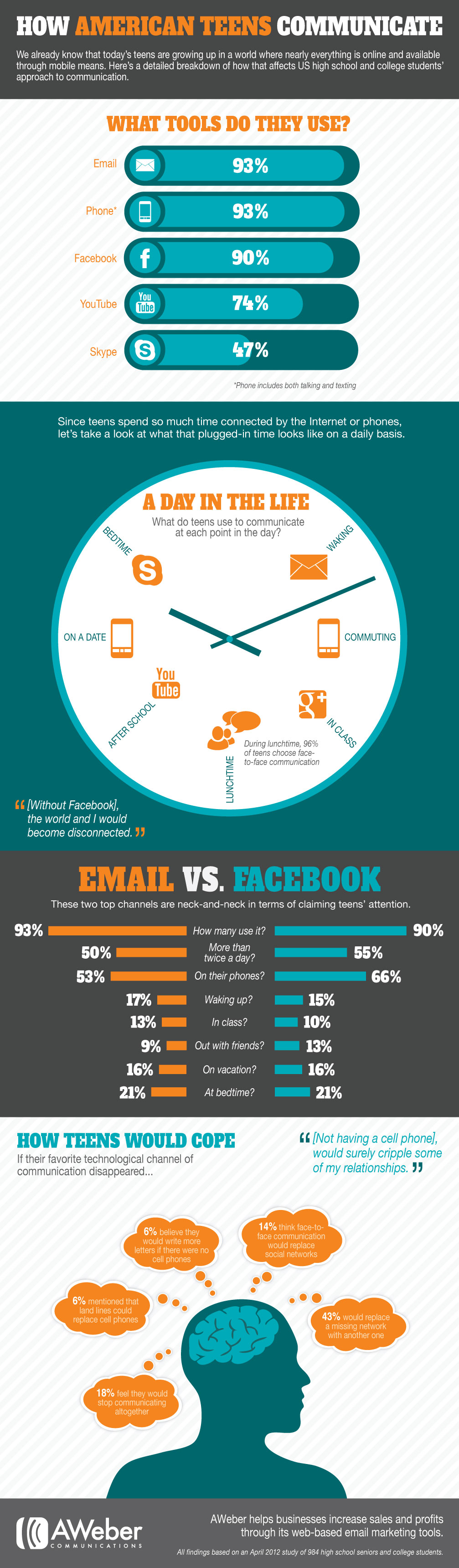
How American Teens
Communicate Infographic
Born Into Tech:
Generation Z Infographic
Others Information
http://www.industrytap.com/generation-alpha-digital-natives-become-greatest-generation/22447
BOOK
Generation Z: Their Voices, Their Lives
By Chloe Combi
Foreword
The teenager and children of Generation Z were born between
1995 and 2001. They are the first generation who have never saved their pocket
money to buy an album. They are astonished when you tell them there used to be
only four channels on TV.
They… .”
Online PDF Information
Designing Recruitment, Selection & Talent Management
Model tailored to meet UNJSPF's Business Development Needs.PDF
订阅:
博文 (Atom)